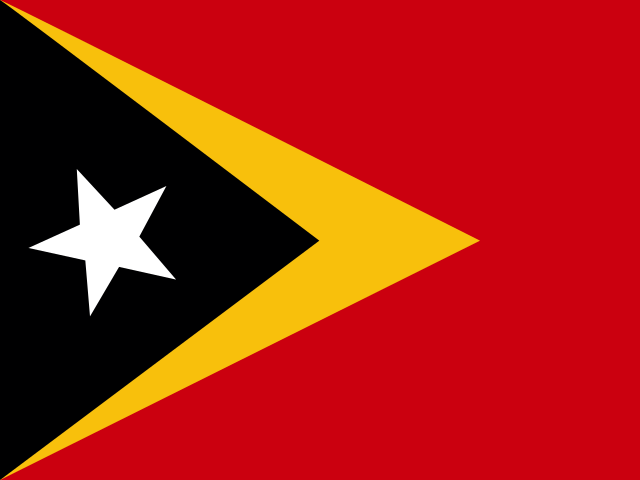
Flag of Timor-Leste

Timor-Leste: capital, population, area and flag

Timor-Leste is a country in Southeast Asia (Asia). Its capital is Dili. The population is about 1.42M (#150 of 193) and the area is about 14,870 km² (#154 of 193).

Key facts

Capital
Dili
Region
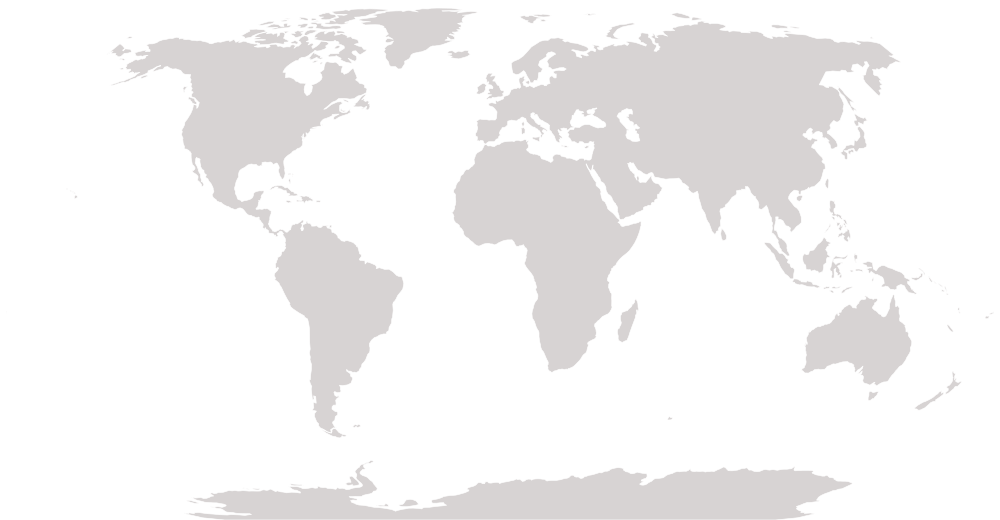
Asia / Southeast Asia
Population
1,418,517 (2025) #150 of 193
Total area
14,870 km² (2024) #154 of 193
Population density
94.2 people/km² (2024) #94 of 193
GDP (total)
$1.9B (2025) #173 of 189
GDP per capita
$1,341 (2025) #164 of 189
Life expectancy
67.9 years (2024) #144 of 193
Distance from Japan
5,137 km #173 of 192
Area compared with Japan
about 1/25 that of Japan
Population compared with Japan
about 1/87 that of Japan
Main languages
Tetum, Portuguese
Currency
US Dollar (USD)
Calling code
+670
Time zone (capital)
UTC+9
Time difference from Japan (standard time)
Same time as Japan
Driving side
Left
Capital location
8.55°S 125.58°E

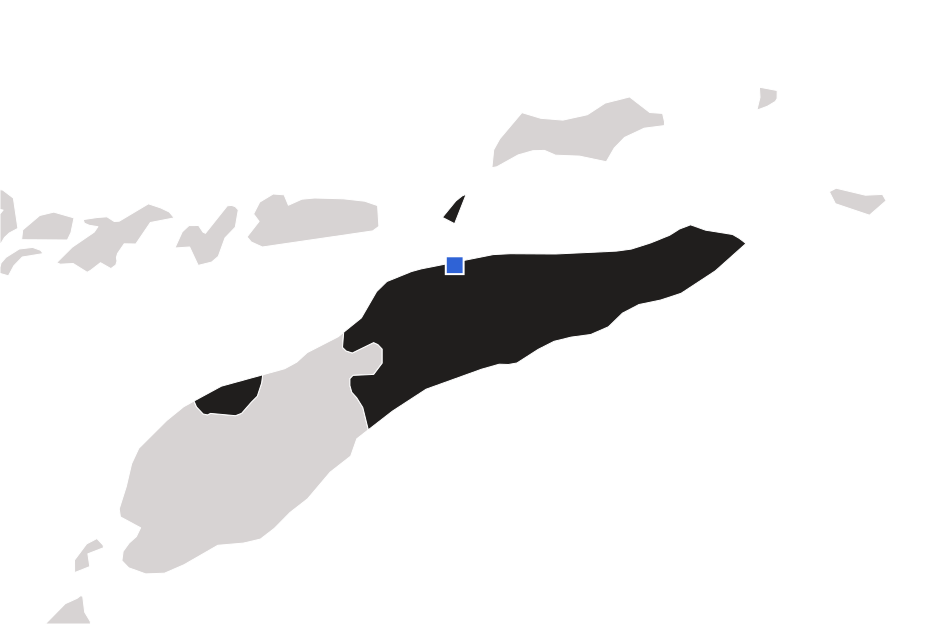
Map of Timor-Leste

Map of Timor-Leste

Capital: Dili

Neighbors by land
Top rankings

Timor-Leste is in the top 10 for:

Timor-Leste in world rankings

How Timor-Leste compares with other countries, indicator by indicator. Click an indicator to see the full ranking.

IndicatorValueYearRank
Geography & nature
Total area14,870 km²2024#154 of 193
Number of land borders1#138 of 193 tied
Latitude of the capital-8.6°#165 of 193
Distance from Japan5,137 km#173 of 192
Forest area (share of land)71.0%2024#16 of 193
Arable land (share of land)7.5%2024#112 of 190
Protected land (share of land)16.1%2025#107 of 192 tied
Agricultural land (share of land)23.0%2024#138 of 192
Average annual rainfall1,500 mm2022#58 of 180 tied
Freshwater resources per person5,999 m³2022#64 of 181
Forest area10,543 km²2025#125 of 193
Marine protected areas (share of territorial waters)0.7%2025#99 of 153 tied
People & population
Population1,418,5172025#150 of 193
Population density94.2 people/km²2024#94 of 193
Population growth rate1.27%2025#78 of 193
Urban population (share of people)28.8%2025#175 of 193
Life expectancy67.9 years2024#144 of 193
Fertility rate2.63 births per woman2024#67 of 193
Infant mortality rate34.6 per 1,000 births2024#34 of 192 tied
Birth rate21.8 per 1,000 people2024#62 of 193
Share of people aged 65 and over5.2%2025#121 of 193
Share of children aged 0–1433.1%2025#56 of 193
Life expectancy of women69.7 years2024#154 of 193
Life expectancy of men66.3 years2024#141 of 193
Maternal mortality ratio192 per 100,000 births2023#38 of 192
Death rate (per 1,000 people)7.2 per 1,000 people2024#95 of 193
Under-5 mortality (per 1,000 births)47.6 per 1,000 births2024#33 of 192
Population aged 15–64 (share of population)61.7%2025#134 of 193
Economy
GDP (total)$1.9B2025#173 of 189
GDP per capita$1,3412025#164 of 189
GDP per capita (PPP)$4,8092025#155 of 185
Economic growth rate7.0%2025#19 of 188
Inflation rate0.4%2025#158 of 179
Unemployment rate1.6%2025#165 of 178
Exports (share of GDP)10.6%2024#161 of 168
Imports (share of GDP)84.9%2024#16 of 168
Agriculture (share of GDP)20.2%2024#36 of 184
Industry (share of GDP)11.8%2024#170 of 185
Services (share of GDP)71.6%2024#18 of 185
Military spending (share of GDP)2.3%2025#51 of 155
Goods exports (total)$103M2025#173 of 190
Money sent home by workers abroad (share of GDP)10.0%2025#25 of 170
Women in the labor force (share of women)61.7%2025#40 of 178
Youth unemployment rate3.7%2025#165 of 178
Cereal production132,000 t2024#137 of 177
Cereal yield (per hectare of farmland)2,112 kg/ha2024#111 of 175
Fish and seafood production (catch + farmed)9,131 t2024#154 of 193
Fish catch (from sea, rivers and lakes)7,876 t2024#143 of 193
Aquaculture (farmed fish and seafood)1,255 t2024#127 of 193
Livestock production growth (2014–16 = 100)93.4 (2014–16 average = 100)2024#159 of 187
Fertilizer use (per hectare of arable land)1 kg/ha2022#179 of 187
Manufacturing (share of GDP)1.9%2024#169 of 178
Employment in agriculture (share of jobs)46.0%2025#27 of 178
High-technology exports (share of manufactured exports)1.5%2023#138 of 168
Foreign direct investment, inflows (share of GDP)13.3%2025#9 of 187
Development aid received (share of national income)11.3%2023#22 of 132
Labor force (number of people)635,4892025#153 of 178
Reserves of foreign currency and gold$806M2025#140 of 169
Daily life & technology
Internet users (share of people)35.0%2021#158 of 186
Mobile phone subscriptions116.4 per 100 people2024#95 of 193
Access to electricity (share of people)94.3%2024#134 of 193
Health spending (share of GDP)9.6%2023#33 of 192
Education spending (share of GDP)5.2%2023#49 of 179
Hospital beds0.4 per 1,000 people2023#150 of 157
Doctors0.75 per 1,000 people2020#123 of 188
Women in parliament (share of seats)35.4%2025#46 of 192
University and college enrollment31.0%2023#106 of 163
Fixed broadband subscriptions0.0 per 100 people2024#189 of 192
Undernourishment (share of people)16.9%2024#35 of 165
Clean cooking fuels (share of people)19.0%2024#162 of 192
Road traffic deaths11.9 per 100,000 people2019#117 of 183
Measles vaccination (share of children)72.0%2024#160 of 192 tied
Secondary school enrollment (gross)84.7%2020#120 of 180
Primary school completion rate93.2%2023#99 of 172
Nurses and midwives (per 1,000 people)1.74 per 1,000 people2020#139 of 190
Tuberculosis cases (per 100,000 people)496 per 100,000 people2024#5 of 191
Health spending per person$1442023#134 of 192
Container port traffic (TEU)53,289 TEU2019#128 of 150
Environment
Renewable electricity (share of power)0.4%2021#175 of 187
CO₂ emissions per person0.5 t CO₂e per person2024#151 of 186
CO₂ emissions (total)0.7 Mt CO₂e2024#164 of 186
Air pollution (PM2.5)12.0 µg/m³2023#139 of 192
Renewable energy (share of final energy use)11.4%2022#138 of 191
Electricity from nuclear power (share of total)0.0%2021#33 of 190 tied
Electricity from hydropower (share of total)0.3%2021#141 of 190
Greenhouse gas emissions (total)1.9 Mt CO₂e2024#162 of 186
Freshwater withdrawal (share of internal resources)14.3%2022#74 of 175
Food & farming
Rice: production62,000 t2024#81 of 114
Maize (corn): production70,000 t2024#108 of 160
Potatoes: production1,217 t2024#142 of 150
Cassava: production17,373 t2024#66 of 92
Sweet potatoes: production4,825 t2024#75 of 105
Soybeans: production861 t2024#87 of 101
Groundnuts (peanuts): production3,351 t2024#78 of 108
Dry beans: production10,779 t2024#69 of 105
Coconuts: production33,023 t2024#41 of 79
Tomatoes: production597 t2024#146 of 164
Cabbages: production2,724 t2024#119 of 143
Cucumbers (with gherkins): production1,179 t2024#112 of 130
Garlic: production394 t2024#89 of 102
Oranges: production1,929 t2024#97 of 112
Bananas: production560 t2024#107 of 113
Mangoes (with guavas and mangosteens): production7,476 t2024#62 of 96
Pineapples: production135 t2024#76 of 82
Avocados: production4,481 t2024#47 of 70
Papayas: production2,211 t2024#48 of 68
Coffee: production9,523 t2024#35 of 74
Cocoa beans: production177 t2024#51 of 58
Beef (cattle meat): production1,275 t2024#156 of 181
Pork (pig meat): production10,803 t2024#98 of 164
Chicken meat: production492 t2024#170 of 183
Hen eggs: production1,164 t2024#149 of 167
Honey: production590 t2024#102 of 122
Sheep meat (mutton and lamb): production50 t2024#154 of 172
Goat meat: production379 t2024#115 of 164
Goat’s milk: production5,179 t2024#86 of 108
Whiteleg shrimp: production12 t2024#44 of 54
Nile tilapia: production430 t2024#50 of 79
Common carp: production25 t2024#77 of 97
Milkfish: production15 t2024#13 of 25
Seaweeds and other aquatic plants: production700 t2024#35 of 68
Shrimps and prawns: production13 t2024#105 of 114
Crabs: production2 t2024#91 of 97
Tunas, bonitos and billfishes: production1,646 t2024#87 of 133
Carps and other cyprinids: production25 t2024#99 of 115 tied
Tilapias and other cichlids: production430 t2024#70 of 119
Herrings, sardines and anchovies: production1,654 t2024#74 of 108
Cattle: number of animals238,902 animals2024#138 of 183
Pigs: number of animals385,128 animals2024#88 of 165
Chickens: number of animals571,000 birds2024#161 of 181
Sheep: number of animals39,000 animals2024#142 of 173
Goats: number of animals145,192 animals2024#112 of 180
Horses: number of animals35,215 animals2024#78 of 143
Buffaloes: number of animals135,972 animals2024#22 of 45

Questions about Timor-Leste

What is the capital of Timor-Leste?

The capital of Timor-Leste is Dili.

What is the population of Timor-Leste?

Timor-Leste has a population of about 1.42M (2025), #150 of 193 among countries.

How big is Timor-Leste?

Timor-Leste covers about 14,870 km², #154 of 193 among countries.

Which continent is Timor-Leste in?

Timor-Leste is in Asia, in the region of Southeast Asia.

What currency and languages are used in Timor-Leste?

The currency is the US Dollar. Main languages: Tetum, Portuguese.

How does Timor-Leste compare with Japan in size and population?

The area of Timor-Leste is about 1/25 that of Japan, and its population is about 1/87 that of Japan.

How far is Timor-Leste from Japan?

The capital, Dili, is about 5,137 km from Tokyo, the capital of Japan, in a straight line.

What is the time difference between Timor-Leste and Japan?

The capital, Dili, is on UTC+9 in standard time: Same time as Japan.

More countries in Southeast Asia
Play with Timor-Leste

Test what you learned in the quiz.

Map puzzle Quiz Rankings

Back to top